
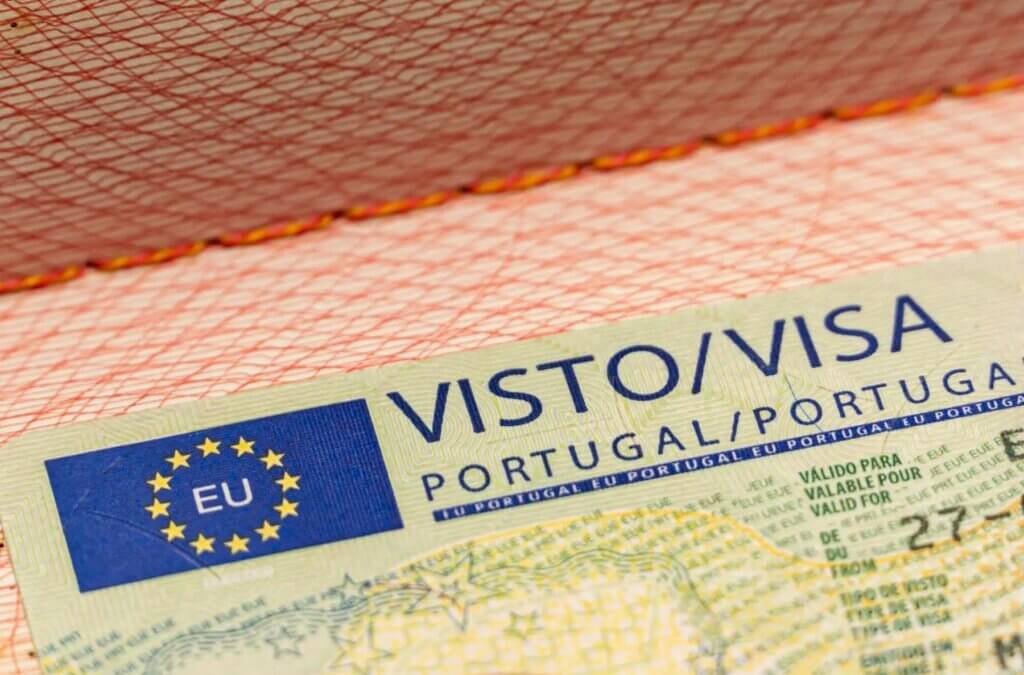
Law No. 23/2007, of July 4, regulates the conditions for entry, stay, exit, and removal of foreign citizens from Portuguese territory. This regime was substantially altered by Law No. 61/2025, of October 22, in force since October 23, 2025. This guide presents an overview of the visas available in 2026, in light of this new framework.
In general terms, a visa is the document that allows legal entry into Portugal, while a residence permit allows a foreign citizen to reside legally in the country for a specified period. These are distinct processes: the visa precedes and enables the application for a residence permit, and should not be confused with it.
What changed in 2025: an indispensable preliminary note.
Before going through each category, it is important to note three structural changes introduced by Law No. 61/2025, as they affect the entire system:
- The regularization process after entry has ended. Procedures for residence permits based on expressions of interest have been revoked. It is no longer possible to enter as a tourist and regularize one's situation once in the country; obtaining the appropriate visa in the country of origin before travel is now mandatory.
- Restriction on job seeker visas. The previous generic category has been replaced by a visa for skilled job seekers, reserved for holders of specialized technical skills and subject to regulation by ministerial order.
- Strengthening the conditions for family reunification, generally requiring a prior period of residence and additional requirements for accommodation, subsistence, and integration.
Types of visas
Portuguese legislation provides for different categories of visas, depending on the purpose of entry into the country. These include short-stay visas, temporary stay visas, visas for seeking skilled work, and residence visas.
Short-stay visa
The short-stay visa is intended for temporary stays, namely for tourism, family visits, business or transit. It may be granted for one or more entries, with a validity of up to one year, and the stay may not exceed 90 days in any 180-day period, in accordance with the rules of the Schengen area.
Temporary stay visa
A temporary stay visa is intended for stays of less than one year. It may be granted, in particular, for:
- Medical treatment;
- Engaging in independent professional activity;
- Remote professional activity for foreign entities (digital nomads);
- Scientific research or temporary teaching activity;
- Study, exchange, internship or volunteer programs;
- Seasonal work.
Visa for skilled job seeker
With Law No. 61/2025, the previous generic job seeker visa ceased to exist, being replaced by the visa for skilled work. It is intended for holders of specialized technical skills, is valid only in Portuguese territory, and is granted for 120 days, extendable for a further 60 days. It allows one entry. If the visa expires without commencement of professional activity, it requires leaving the country, and a new application can only be submitted one year later.
Residence visas
Residence visas are intended for those who wish to reside in Portugal for a period exceeding one year. The residence visa is valid for two entries and entitles the holder to remain for four months, during which time they must apply for a residence permit from AIMA. Among the main types:
- Residence visa for subordinate work;
- Residence visa for self-employment or entrepreneurship;
- Residence visa for highly qualified activity;
- Residence visa for remote work (digital nomads, D8);
- Residence visa for study, research, internship or volunteering;
- Residence permit for family reunification.
General conditions for granting visas
The granting of the permit depends on fulfilling the requirements stipulated in Law No. 23/2007, as currently amended. In general, the foreign citizen must:
- Not being subject to deportation measures from Portugal;
- Not being subject to a period of entry and stay restrictions;
- Not to be listed in entry refusal alert systems;
- To have means of subsistence;
- Possess a valid travel document;
- Have travel insurance.
Law No. 61/2025 also introduced a relevant ground for refusal: a residence visa, temporary stay visa, or visa for seeking qualified work is refused to a national of a third country who has entered or remained illegally in national territory. In cases of threats to public order, national security, or public safety, the ban may be extended for up to seven years.
Extension of stay
The law allows for the extension of stay, with limits that vary depending on the type of visa:
- Up to 60 days for holders of skilled work search visas;
- Up to 90 days for residence visa holders;
- Up to 90 days, renewable for the same period, for holders of short-stay visas;
- Up to one year for holders of temporary stay visas.
In certain situations, the stay may be extended while the residence permit application is pending.
AIMA decision deadlines
Law No. 61/2025 established that AIMA generally has nine months to decide on residency applications, which may be extended in exceptional cases.
Special regime for citizens of the CPLP
Citizens of States that are party to the CPLP Mobility Agreement benefit from a specific regime. With Law No. 61/2025, the prior opinion of AIMA (Authority for Immigration and Customs) is no longer required for these citizens to obtain residence visas. Conversely, the option of regularization after entering as a tourist has also been eliminated.
Frequently Asked Questions
Can I apply for a residence permit by entering as a tourist?
No. With Law No. 61/2025, this regularization was eliminated. It is necessary to obtain the appropriate visa in the country of origin.
What is the difference between a visa and a residence permit?
The visa allows legal entry and enables you to apply for a residence permit with AIMA. The permit is the document that grants the right to legally reside in the country.
How long does it take AIMA to make a decision?
As a rule, up to nine months, extendable in exceptional cases.
What has changed for citizens of the CPLP?
They maintain a favorable regime, but lost the path to regularization after entering as tourists.
Article authored by Sara Marcos Filipe, Trainee Lawyer, in conjunction with João Paulo Marques, Lawyer.